
Unlocking the Mysteries of the Cosmos
At Nova, we invite you to delve into the awe-inspiring realm of the universe. ‘Understanding the Universe’ is not just a title; it’s an invitation to explore the fundamental principles that govern celestial bodies and their intricate interactions. Our mission is to elucidate complex cosmic phenomena, making them accessible to all.
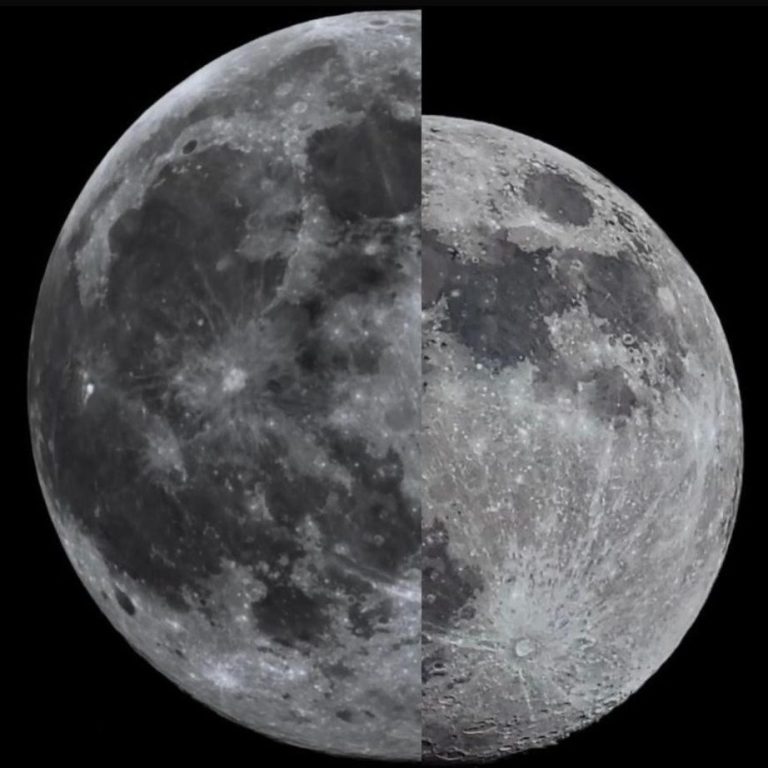
The Moon at Apogee & Perigee
This is an incredible picture of two halves. On the left is the Supermoon on Dec 4th 2025, imaged at Perigee when it was just 354 kilometres (220k miles) to Earth.
On the right is an image taken on 21st April 2024 when the moon was very close to Apogee, 404 kilometres (250k miles).
The difference is huge! Both images captured with a Seestar telescope by Peter Rippington from the Luton astronomical society.
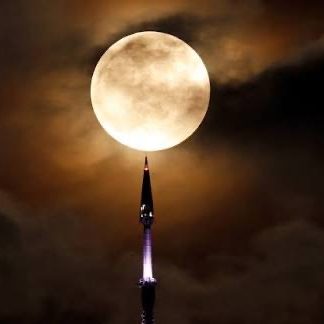
Last Supermoon of 2025
On the 4th December 2025 the final super moon of the year will illuminate the night sky! This occurs when the moon reaches its nearest point to our planet, roughly 10 to 14 per cent closer (at perigee) than average on its elliptical orbit around Earth making it look up to 30% brighter and 14% larger.
Peak of the full moon will be at 11.14 pm GMT but it's most visually impressive during the time of the moonrise when it appears largest near the horizon.
You won’t see a moon as bright or as big until the year 2043!
Photo credit: live Science

Dr Ella Gilbert on Sky News
Discussing a subject close to my heart first on the Sky News newspaper review this morning (26 November 2025): Heathrow expansion.
Silence is Golden
In the great void of our cosmos we look for connection. We send signals into the dark. We echo our presence into the unknown, scan the depths as far as we can using all instruments, spectrums and frequencies. We monitor we watch. It is in our very nature.
We want to keep the potential we aren’t alone yet we are perhaps not prepared for an encounter. This is a perplexing paradox.
We long for contact but are glad when it never comes, because at this point we may be unable to meet the reality of what that means.
The passing silence should be a reminder that we need to look inwards as much as outwards as when something incredible finally rises on our horizon we need to be sure we don’t obliterate it through our own fears.
Look to the Sky This Week - 23/11/25
Comet 3I/ATLAS
The faint interstellar comet that has caused a bit of commotion on forums recently is gaining altitude in the pre-dawn sky and can now be observed with a telescope. It will appear as a faint, fuzzy patch about 30 degrees up in the east-southeast just before sunrise. The closest approach of comet 3I/ATLAS to Earth will happen on Friday 19 December 2025. The distance is 1.798402 Astronomical Units, or 269,037,114 kilometers.
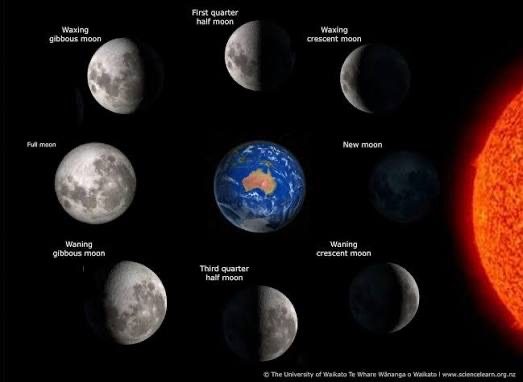
Additionally this week the Moon at Apogee: On November 20th, the Moon reached its farthest point from Earth in its orbit. At this distance, the Moon appears smaller and dimmer in the sky, and its gravitational pull on Earth's tides is weaker, resulting in smaller tidal variations. The right edge will become brighter throughout the week. The waxing crescent phase will end on Tuesday leading to the quarter moon.
Prehistoric Planet: Ice Age
Something VERY exciting is around the corner, our very own Dr Ella Gilbert was involved in season 3 of this landmark series from BBC Studios and Apple TV Plus and we're really excited to see it!
First they brought you the dinosaurs, now it's the turn of ice age creatures...
Discover the secret lives of ancient animals and how they handled the huge climatic shifts that happened over thousands of years.
We'll get the popcorn
Prehistoric Planet: Ice Age is streaming November 26th, only on Apple TV