
What Was the Big Bang, Really? (Without the Math Headaches)
Imagine inflating a balloon covered in dots created by a sharpie. As the rubber stretches, every single dot moves further away from every other dot—not because the dots are walking, but because the fabric under them is expanding.
That balloon trick is the most accurate way to understand the Big Bang.
Myth #1: It Wasn't an Explosion
Pop culture pictures a giant dynamite blast in the middle of a dark room. But in reality, there was no pre-existing room and no dynamite.
Before the Big Bang, all space, time, and matter were compressed into an infinitely small, ultra-hot point called a singularity. The Big Bang wasn't an explosion in space—it was the sudden, rapid expansion of space itself.
The 3-Minute Cosmic Timeline
Roughly 13.8 billion years ago, the universe started stretching, cooling down rapidly as it grew:
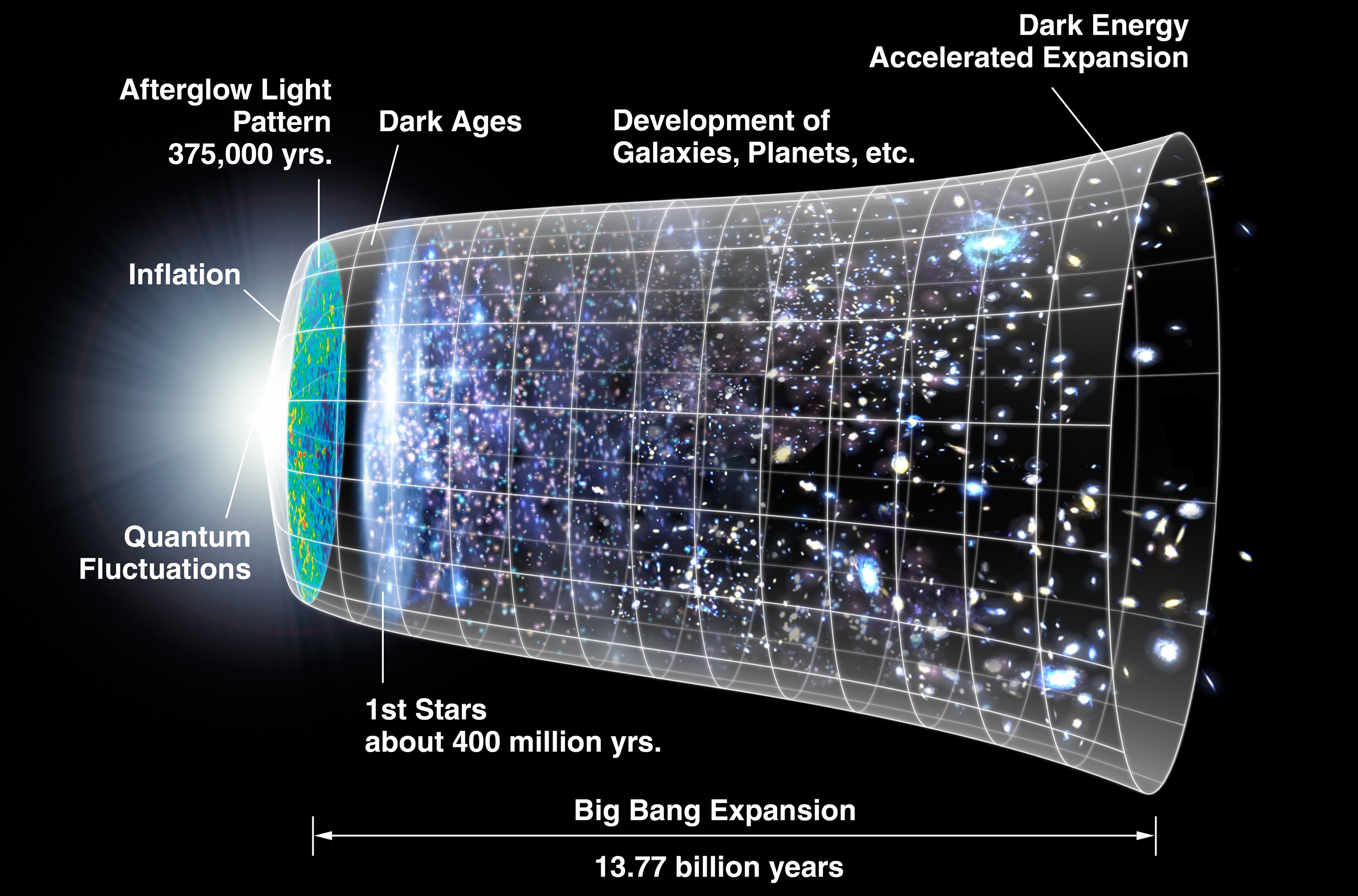
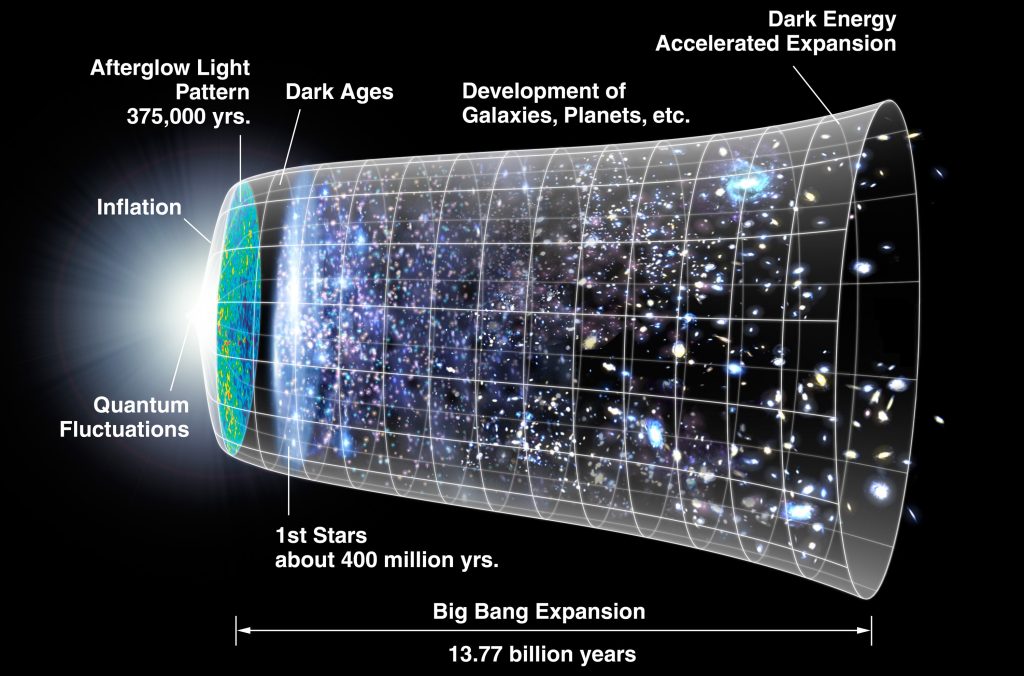
- The First Split Second: Space expanded faster than the speed of light in a phase called inflation, stretching out the smooth backdrop of our cosmos.
- Minutes 0 to 20: Basic subatomic particles formed and fused into the first lightweight atoms—mostly hydrogen and helium.
- 380,000 Years Later: The cosmos cooled enough for light to travel freely, leaving behind an ambient glow known as the Cosmic Microwave Background.
- 1 Billion Years Later: Gravity pulled those early hydrogen clouds together, igniting the first stars and shaping the first galaxies.
How Do Scientists Know This Actually Happened?
Scientists don't just rely on theory; two massive clues support the model:
- Galaxies are flying apart: In 1929, astronomer Edwin Hubble discovered that distant galaxies are moving away from us in every direction. Rewind that movie backward, and everything must have started at the exact same spot.
- The Universe has an "Afterglow": In 1964, researchers accidentally caught static noise on a radio antenna. That noise turned out to be the faint thermal radiation left over from the Big Bang, cooled to just above absolute zero.
The universe isn't expanding into anything outside of itself—it's simply generating more space between its contents every single second.